By, Issam Khoury
The report in Arabic: حرب الخليج القادمة
A war with Iran is not inevitable, but the risk is rising.
The seizure of an Iranian oil tanker near Gibraltar in July 2019, tighter enforcement of US sanctions, growing Western criticism of Tehran’s nuclear policy, and Washington’s withdrawal from the nuclear deal have all placed Iran on high alert. For Tehran, the danger is not simply another round of sanctions, but a confrontation that could threaten its long-standing ambition to become the dominant regional power in the Middle East.
But the pressure on Iran is not only diplomatic or economic. Several regional shifts are also reshaping the balance of power across the Middle East.
1 –The UAE withdrawal from Yemen[2]
Although the UAE military is one of the most active parties in the international coalition against the Houthis in Yemen, it withdrew between 70-75% of its forces from Yemen in mid-July 2019[1], under the pretext of allowing space for political negotiations with the Houthis. However, this reason is certainly unconvincing, as Emirati military experts are still training Yemeni fighters against the Houthis to this day. Perhaps the purpose of the UAE’s withdrawal from Yemen is to redirect its military and intelligence resources eastward, especially since Iran began seizing Emirati and British ships in the Strait of Hormuz in response to Britain’s seizure of the Iranian oil tanker in Gibraltar.
In reality, if the Iranian regime collapses, the Houthis in Yemen will lose their most prominent ally, which would be a victory for the UAE and Saudi Arabia. Therefore, the UAE will seek to place its army and intelligence within an international coalition to protect maritime navigation in the Strait of Hormuz. Certainly, such a coalition would require its forces to ensure the safety of ships passing through the Bab al-Mandab Strait, where the Houthis, backed by Iran, pose a threat to maritime navigation.
2- Strengthening Gulf – Israeli relations:
Gulf-Israeli relations have witnessed diplomatic overtures, beginning with Israeli sports participation in Abu Dhabi at the end of October 2018[3], The peak of these relations was the organization of a peace meeting between Israelis and Arabs in Bahrain (“Manama”) on July 25-26, 2019, sponsored by US President Trump’s son-in-law, Kushner, as part of the so-called “Deal of the Century”[4],
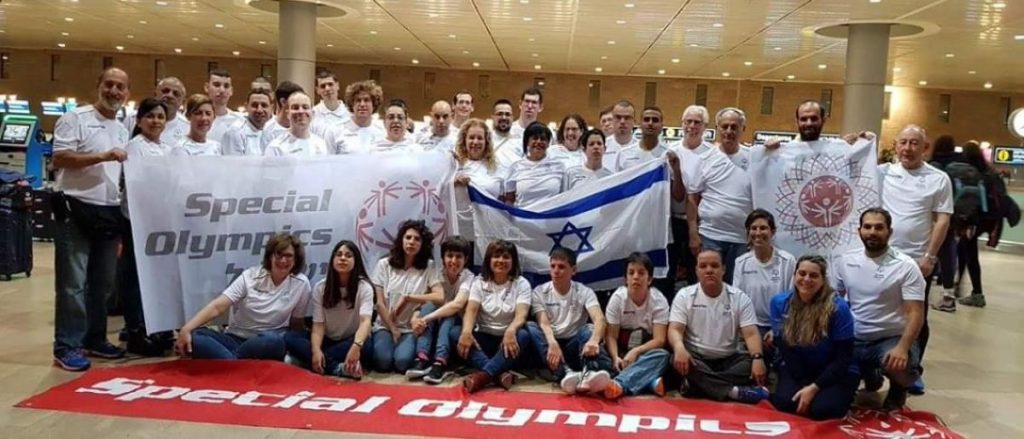
In reality, whether or not there is Arab peace with Israel, both Gulf and Israeli parties have an interest in reducing Iranian influence in the Middle East. This intersection of interests may allow Israelis to use Gulf airspace to help protect global maritime navigation and prevent the Iranian threat to the world economy.
3 – The British Conservative Party and Iran:
Britain has long played a central role in shaping Middle Eastern politics. After Theresa May left office and Boris Johnson became prime minister, Johnson used his first appearance before the House of Commons on July 25, 2019, to sharply criticize Labour leader Jeremy Corbyn, accusing him of siding with Iran’s mullahs and opposing Britain’s historic partnership with the United States.[5] .
Johnson was known for his hardline stance toward the Islamic Republic of Iran and his close alignment with the US Republican Party. Around the same time, a British minesweeper was deployed to Gulf waters amid concerns that Iran might lay naval mines or threaten the Strait of Hormuz as leverage in its confrontation with Washington.
4- Israeli Airstrikes in Syria and Iraq
The “right to respond” policy repeatedly declared by Bashar al-Assad, commander of the army and armed forces, after every Israeli strike on Syrian territory, did not prevent Israel from continuing to bomb vital targets of the Iranian Revolutionary Guard in Syria. The major shift in Israeli policy occurred on July 18, 2019, when its aircraft bombed Popular Mobilization Forces sites in Salah al-Din province[6].

5 – New American Bases in Iraq
Iraqi Al-Ikhbariya TV reported on Sunday, January 6, 2019, that Washington intended to establish three new American bases in Iraq. The locations were identified as follows:
The first base would be in Baiji district, inside the al-Siniya base near the refinery, formerly the headquarters of the 14th Brigade.
The second base would be in the Fatha area, formerly known as the 2nd Regiment.
The third base would be located at K1 in Kirkuk province.
This move by Washington reflected the Pentagon’s desire to strengthen the US presence in the Middle East, first to fight terrorism and second to protect American interests in Iraq. It also came after the reduction of the US military presence during the Obama administration, which contributed to the expansion of Iranian influence in Iraq and the growing power of religious parties backed by Tehran within the Iraqi parliament and government.
6 – The resumption of training for Syrian opposition factions previously aligned with Washington, after such training had been suspended in 2017.
Iran’s actual power:
The Iranian regime is a totalitarian religious system, and its military strength is concentrated mainly in the following areas:
1- Ballistic missiles[8]:
signal to international powers that it possessed a deterrent capability in the event of an attack. In reality, Iran’s boast about its missile arsenal remains modest when compared with the scale of military power arrayed against it, particularly from the United States and Israel.
On Sunday, July 28, 2019, Israeli Prime Minister Benjamin Netanyahu announced that Israel, in cooperation with Washington, had successfully tested the Arrow-3 air defense system in Alaska. The system is designed to intercept ballistic missiles outside the atmosphere. Netanyahu stated that Israel now had the capability to respond to ballistic missiles launched from Iran or elsewhere.[10].”
Russia, meanwhile, is unlikely to support Tehran in such a confrontation. It may even use the S-400 system deployed in Syria to shield Israel from Iranian missiles under the pretext of protecting Israeli civilians. Despite Moscow’s cooperation with Tehran in Syria, Russia remains a reliable partner for Israel, and Israel maintains significant political and economic influence in Moscow.
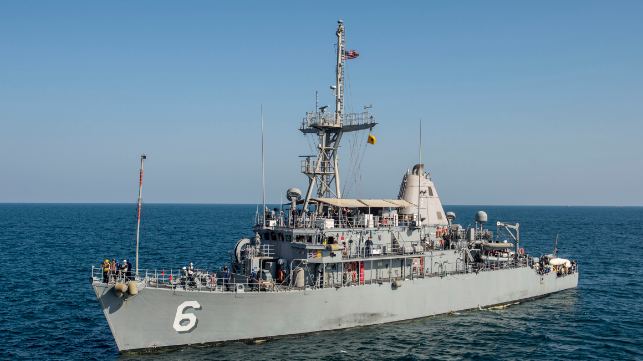
Photo: The USS Devastator, a Navy minesweeper, is pulled into position as it arrives in Bahrain in 2012. (Jayme Pastoric/U.S. Navy)
2 – A naval mine:
In practice, Iran is capable of closing the Strait of Hormuz by deploying naval mines[11],and this is a highly complex matter. No country or minesweeper can conduct a thorough sweep of the Arabian/Persian Gulf. However, if war breaks out against Iran, all commercial ships will leave the Gulf, and this departure may take up to three months until maritime navigation is secured. At this point, we will be facing one of the following two scenarios:
First: Punitive airstrikes against Iran, followed by political negotiations, the most prominent outcome of which would be Iran removing its naval mines and moving its ballistic missiles away from the western shore of the Arabian/Persian Gulf.
Second: A full-scale war aimed at overthrowing the Iranian regime. If this happens, the new leaders in Tehran may force the defeated military commanders to disclose all maps showing the locations of naval mines. The new “Washington-backed” government in Tehran may also pay the costs of the war and the costs of mine removal, which could be carried out by international companies specializing in mine clearance.
“We are eager to operate if called upon,” the officer aboard one of the Persian Gulf ships said. “We’ll operate the systems as best as they can operate. My concern is the ships are old and, like any old ship, they break.”
The Avenger-class ships were built in the late 1980s and early ’90s and slated for retirement years ago. But their retirement date has been continually delayed because the service still doesn’t have a working replacement. The Navy’s latest estimate is that the ships will all be decommissioned by fiscal year 2023.[12]
3 – Sectarian militias and suicide bombers
The Iranian Revolutionary Guard, specifically the Quds Force, has managed to train thousands of Shiite sectarians to form multiple battalions such as (Hezbollah in Lebanon and Iraq, Fatemiyoun Brigade [13], Popular Mobilization Forces[14], Houthi movement[15], Liwa al-Imam al-Hussein[16]..) and also contributed to the training of Sunni jihadist radicals such as (Islamic Jihad Movement in Palestine[17], Hamas[18], Mumtaz Dughmush Group [19]).
This radical sectarian force is ideologically driven to hate Americans and Israelis, making it very easy to recruit fighters for suicide operations in American bases across the Middle East. Certainly, these suicide operations will not be in the Gulf but rather in Iraq and Syria, close to areas of Iranian Revolutionary Guard influence (Iraq, northeastern Syria, Al-Tanf base [20]
Al-Tanf base is perhaps the most exposed area to such operations if the Iranian Revolutionary Guard decides to carry them out. In northeastern Syria and Iraqi Kurdistan, there are many defensive points established by Kurdish protection forces “SDF”[21], and the Peshmerga[22] which may hinder the arrival of these suicide bombers to areas where the American army is stationed. As for the Al-Tanf area, it does not have a large population of Syrian opposition; the number of residents in the nearby Rukban camp [23], does not exceed about 40,000 people. The number of Syrian militia fighters loyal to Washington in that area is limited to “Eastern Lions, Army of Free Tribes, Martyr Ahmad al-Abdo Forces,” who are residents of Rukban camp. Washington is aware of this danger, which prompted it to retrain and rearm these militias at the beginning of May 2019, after its project to support and arm the Syrian opposition stopped in July 2017.
Investigative expectations:
The Americans are not in a hurry to declare war against Tehran, and the best time to do so would be spring or summer of next year. Such a war could be an excellent opportunity for President Trump to capitalize on it before the 2020 elections, as it would garner support from all research centers close to the Israeli lobby in Washington, as well as the arms and oil company lobbies. This means a great opportunity for his re-election as President of the United States. Thus, we see Trump’s tweets on social media focusing on criticizing the Iranian regime while leaving the door open for dialogue under Washington’s tough conditions for Tehran, in addition to demanding wealthy countries like (Saudi Arabia, Japan, and China) to provide financial support for the American army that will protect navigation in the Arabian/Persian Gulf. This means that the cost of the war will not be American but will be shared by all countries participating in the international coalition to protect maritime navigation.
NEW YORK – 2019
Iran, for its part, realizes that Washington will not act alone against it, and forming an international coalition may take several months, which would be dangerous and repeat what happened to Iraq in 2003. Therefore, Tehran is trying to preempt this by provoking Washington and Britain into carrying out limited punitive strikes against it. In turn, Iran will resort to limited military responses that disrupt navigation in the Gulf and cause a crisis in the global economy. Simultaneously, it will seek through diplomatic channels to restrain Washington from launching a sweeping attack to change the regime in Iran, in exchange for Iran’s commitment to cooperate with Washington and Britain to protect maritime navigation.
It seems that Washington is aware of Iran’s plan and will not be drawn into a limited war with Tehran. The ceiling of Washington’s demands during the Republican rule is high and includes the following:
1. Tehran abandoning its nuclear program
2. Tehran abandoning the development of its ballistic missile program
3. Tehran stopping its support for radical religious militias throughout the Middle East
These demands essentially mean stopping Iran’s program to export its Islamic revolution abroad, which would mean the collapse of years of work by the Iranian government. This is impossible to accept by the clerics of Qom, the Supreme Leader of the Iranian Revolution, the Iranian conservative party, and the Revolutionary Guard. Therefore, the most likely expectation is that Iran will not submit to Washington, which will push the latter to wage a major war to change the regime in Tehran and turn it into a flexible democratic system.
Washington and Europe today have a reasonable and organized alternative from the Iranian opposition, which is the (National Council of Resistance of Iran [25]. and its most prominent pillar is the Mujahideen-e-Khalq movement [20], which is active in periodic demonstrations against Iran in various countries around the world after it was removed from the list of terrorism in Europe in September 2011, and also removed by America in September 2012.
[1] A tanker is a ship designed to transport or store liquids or gases in bulk. Major types of tankship include the oil tanker, the chemical tanker, and gas carrier.
[2] The United Arab Emirates sent at least 5,000 troops to Yemen to train and lead a mélange of pro-government troops and militias, have wanted out for some time now. They say the United Arab Emirates has sharply cut its deployment of men, attack helicopters and heavy guns around the Red Sea port of Hudaydah, the main battleground last year. A shaky United Nations-mediated cease-fire in Hudaydah that came into effect last December provided the excuse and a reason to pull back. (Follow the Emiratis’ Lead, Out of Yemen/ NY-Times/ July 15, 2019).
[3] Flying own flag, three Israelis win bronze at Abu Dhabi judo tourney/ The Times of Israel/ 28 October 2018.
[4] Bahrain conference showcases Israeli ties with Gulf states
Read more: https://www.al-monitor.com/pulse/originals/2019/06/israel-gulf-states-bahrain-saudi-arabia-iran-palestinians.html#ixzz5vqrYPeBo
[5]https://iranintl.com/ar/%D8%A5%D9%8A%D8%B1%D8%A7%D9%86/%D8%A8%D9%88%D8%B1%D9%8A%D8%B3-%D8%AC%D9%88%D9%86%D8%B3%D9%88%D9%86-%D9%8A%D8%AA%D9%87%D9%85-%D8%B1%D8%A6%D9%8A%D8%B3-%D8%AD%D8%B2%D8%A8-%D8%A7%D9%84%D8%B9%D9%85%D8%A7%D9%84-%D8%A7%D9%84%D8%A8%D8%B1%D9%8A%D8%B7%D8%A7%D9%86%D9%8A-%D8%A8%D9%80%D8%A7%D9%84%D8%AA%D8%A8%D8%B9%D9%8A%D8%A9-%D9%84%D9%85%D9%84%D8%A7%D9%84%D9%8A-%D8%A5%D9%8A%D8%B1%D8%A7%D9%86
[6] https://aawsat.com/home/article/1821021/%D9%82%D8%B5%D9%81-%D9%85%D8%B9%D8%B3%D9%83%D8%B1-%D8%A7%D9%84%D8%AD%D8%B4%D8%AF-%D8%A7%D9%84%D8%B4%D8%B9%D8%A8%D9%8A-%D9%81%D9%8A-%D8%B4%D9%85%D8%A7%D9%84-%D8%A8%D8%BA%D8%AF%D8%A7%D8%AF
[7] Al-Tanf, also known as “At Tanf”, is a United States military base in Syria’s Homs Governorate located 24 km west of the al-Tanf border crossing in the Syrian Desert
[8] While Iran has not yet tested or deployed a missile capable of striking the United States, it continues to hone longer-range missile technologies under the auspices of its space-launch program. In addition to increasing the quantity of its missile arsenal, Iran is investing in qualitative improvements to its missiles’ accuracy and lethality. Iran has also become a center for missile proliferation, supplying proxies such as Hezbollah and Syria’s al-Assad regime with a steady supply of missiles and rockets, as well as local production capability. https://missilethreat.csis.org/country/iran/
[9] Arrow-3 missiles successfully took out target missiles in high-altitude, hit-to-kill test engagements conducted at the Pacific Spaceport Complex-Alaska in Kodiak. The tests were a joint effort between the Israel Missile Defense Organization of the Directorate of Defense Research and Development and the U.S. Missile Defense Agency. https://www.defensenews.com/pentagon/2019/07/28/us-israels-arrow-3-missile-put-to-the-test-in-alaska/
[10] https://www.reuters.com/article/us-israel-usa-missiles/israel-says-arrow-3-missile-shield-passes-us-trials-warns-iran-idUSKCN1UN088
[11] A naval mine is a self-contained explosive device placed in water to damage or destroy surface ships or submarines. Unlike depth charges, mines are deposited and left to wait until they are triggered by the approach of, or contact with, any vessel.
[12] https://www.propublica.org/article/iran-has-hundreds-of-naval-mines-us-navy-minesweepers-find-old-dishwashers-car-parts
[13] Liwa Fatemiyoun, literally “Fatimid Banner”, also known as Fatemiyoun Division, Fatemiyoun Brigade, or Hezbollah Afghanistan, is an Afghan Shia militia formed in 2014 to fight in Syria on the side of the government
[14] The Popular Mobilization Forces, also known as the People’s Mobilization Committee and the Popular Mobilization Units, is an Iraqi state-sponsored umbrella organization composed of some 40 militias that are mostly Shia Muslim groups.
[15] The Houthi movement, officially called Ansar Allah, is an Islamic religious-political-armed movement that emerged from Sa’dah in northern Yemen in the 1990s. They are of the Zaidi sect.
[16] Liwa al-Imam al-Hussein (The Imam Hussein Brigade) is an Iraqi Shi’a militia primarily operating in the Damascus area, working under the narrative of defending the Sayyida Zainab shrine. It has most notably been a participant in a regime offensive on the East Ghouta locality of al-Mleha (a focal point of Sunni rebel activity), coordinating with other Iraqi Shi’a militias such as Liwa Assad Allah al-Ghalib. Ideologically, Liwa al-Imam al-Hussein asserts affinity with Muqtada al-Sadr.
[17] The Islamic Jihad Movement in Palestine known in the West as simply Palestinian Islamic Jihad, is a Palestinian Islamist organization formed in 1981 whose objective is the destruction of the State of Israel and the establishment of a sovereign.
[18] Hamas is a Palestinian Sunni-Islamist fundamentalist organization. It has a social service wing, Dawah, and a military wing, the Izz ad-Din al-Qassam Brigades. It has been the de facto governing authority of the Gaza Strip since its takeover of that area in 2007. During this period it fought several wars with Israel
[19] Mumtaz Dughmush (also spelled Durmush) is the leader of the Salafi-jihadi group Jaysh al-Islam in Gaza, and a member of the large Dughmush clan. According to journalist Donald Macintyre, “during the 1990s he had been a member of the PA Preventative Security Organisation headed by Mohammed Dahlan, but during the [Second] Intifada he joined Jamal Abu Samhadana to form the militant Popular Resistance Committees. After the 2006 elections, Dughmush, whose militia was now operating autonomously…joined with the PRC and Hamas’s Qassam Brigades to capture [Israeli soldier] Gilad Shalit, and defied the Islamic faction’s authority, by kidnapping the two Fox News journalists. https://www.ecfr.eu/mapping_palestinian_politics/detail/mumtaz_durmush.
[20] Al-Tanf, also known as “At Tanf”, is a United States military base in Syria’s Homs Governorate located 24 km west of the al-Tanf border crossing in the Syrian Desert. The surrounding deconfliction zone is located along the Iraq and Jordan–Syria border
[21] The People’s Protection Units or People’s Defense Units is a mainly-Kurdish militia in Syria and the primary component of the Syrian Democratic Forces. The YPG is mostly ethnically Kurdish.
[22] Peshmerga, the military forces of the autonomous region of Kurdistan Region of Iraq. Since the Iraqi Army is forbidden by Iraqi law to enter Kurdistan Region, the Peshmerga, along with their security subsidiaries, are responsible for the security of the regions in Iraqi Kurdistan.
[23] Rukban, sometimes transliterated Rakban, Arabic (الرُّكبان) or (الرُّقبان) is an arid remote area on the Syrian border with the near the extreme northeast of Jordan, close to the joint borders with Syria and Iraq. The area became a refugee camp for Syrians in 2014
[24] The National Council of Resistance of Iran is an Iranian political organization based in France.
[25] The People’s Mojahedin Organization of Iran, or the Mojahedin-e Khalq, is an Iranian political organization based on Islamic and socialist ideology. It advocates overthrowing the Islamic Republic of Iran leadership and installing its own government.

 Issam Khoury